
Introduction
Texas smoked brisket is more than just a meal—it’s a tradition, an art form, and a point of pride for pitmasters across the Lone Star State. Known for its perfect balance of smoky flavor, juicy tenderness, and a beautifully rendered bark, mastering Texas-style brisket takes time, patience, and the right techniques.
In this guide, you’ll learn everything from selecting the right cut to achieving that perfect slow-smoked finish that melts in your mouth.
What Makes Texas Brisket Special?
Texas-style brisket is famous for its simplicity and dedication to the fundamentals of BBQ. Unlike other BBQ styles that rely heavily on marinades or sauces, authentic Texas brisket lets the quality of the meat and smoke shine through with just a simple rub and slow smoking.
Key Characteristics of Texas Brisket:
- Simple Seasoning: A classic Texas brisket relies on salt, black pepper, and sometimes a touch of garlic powder.
- Low and Slow Cooking: Brisket is cooked at 225–250°F (107–121°C) for 10–16 hours.
- Post Oak Wood: Traditionally, post oak is the preferred wood, offering a mild, slightly sweet smoke flavor.
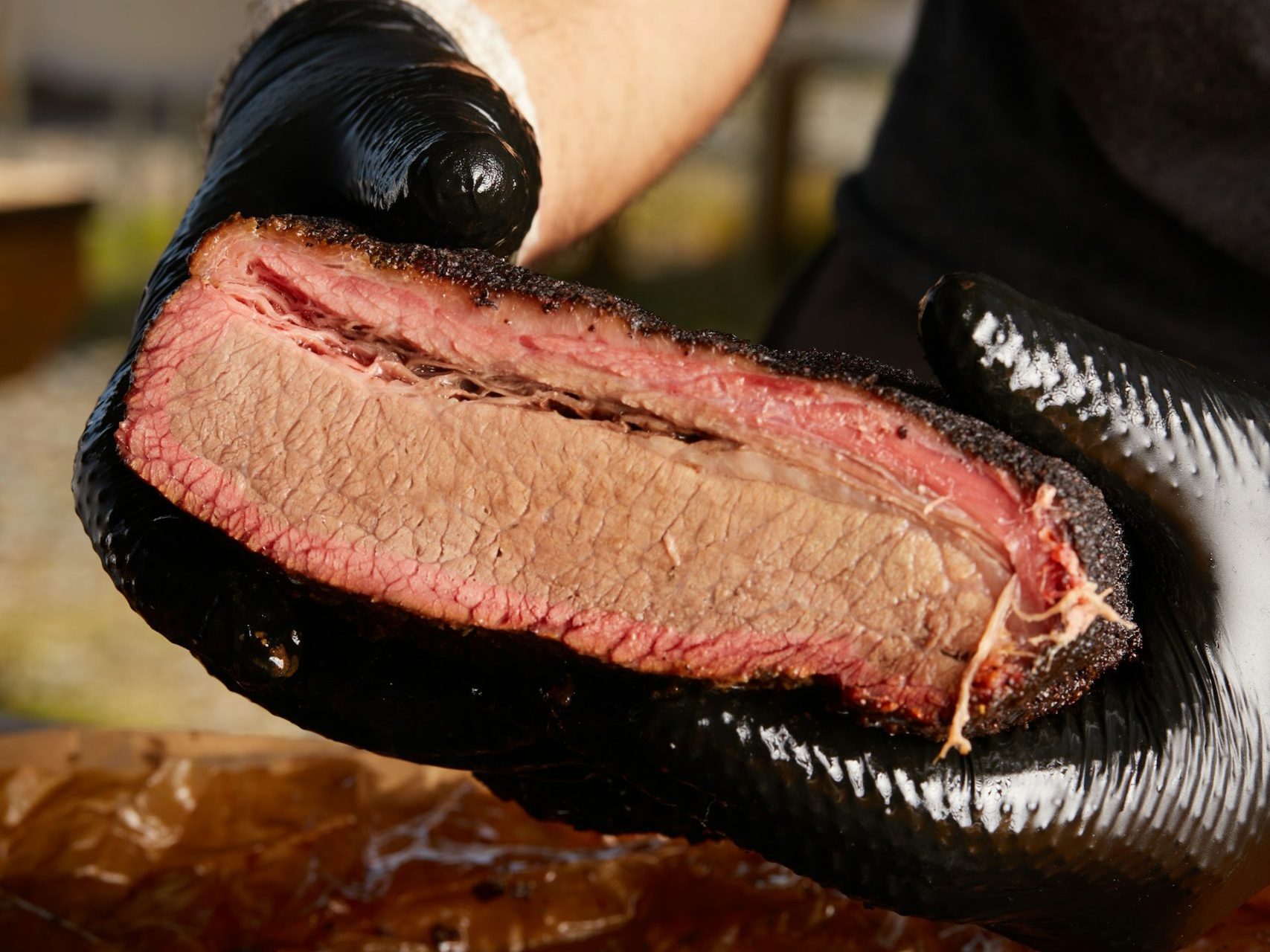
- Perfect Bark: A dark, flavorful crust formed through the Maillard reaction during the long smoking process.
Choosing the Right Brisket
Selecting a high-quality brisket is the first step in achieving that authentic Texas flavor.
1. Grade Matters
Look for USDA Prime or Choice grade brisket for optimal marbling and tenderness. Prime briskets have better fat marbling, which enhances flavor and moisture.
2. Whole Packer Brisket vs. Flat or Point Cuts
- Whole Packer Brisket: Contains both the flat and the point, ideal for smoking. Typically weighs 10–16 lbs (4.5–7.2 kg).
- Flat Cut: Leaner and easier to slice but may dry out quicker.
- Point Cut: Fattier and more flavorful but less uniform in shape.
3. Trim for Success
Trim excess fat, leaving about 1/4 inch (6 mm) on the fat cap to keep the brisket moist during smoking.
Texas Brisket Rub: Keeping it Simple
Texas-style brisket rub is all about simplicity and enhancing the beef’s natural flavors.
Traditional Texas Brisket Rub Recipe:
- 1/4 cup (60 g) coarse kosher salt
- 1/4 cup (60 g) coarse black pepper
- 1 tbsp (15 g) garlic powder (optional)
How to Apply the Rub:
- Pat the brisket dry with paper towels.
- Coat the brisket evenly with the rub, ensuring all sides are covered.
- Let it sit at room temperature for 30 minutes before smoking.
Setting Up Your Smoker for Texas Brisket
A steady smoking environment is key to getting the perfect brisket.
1. Best Wood for Texas Brisket
- Post Oak: Traditional choice with mild, sweet smoke flavor.
- Hickory: Adds a stronger, bold flavor but should be used in moderation.
- Pecan: Provides a slightly nutty, sweet flavor.
2. Smoking Temperature
Maintain a consistent smoker temperature between 225–250°F (107–121°C) for a slow, even cook.
3. Using a Water Pan
Adding a water pan helps regulate humidity and prevents the brisket from drying out.
The Smoking Process: Step-by-Step
1. Step 1: Preheat the Smoker
Set your smoker to 225°F (107°C) and add your chosen wood chunks or chips.
2. Step 2: Place the Brisket in the Smoker
Position the brisket fat side up to allow the fat to render and baste the meat naturally.
3. Step 3: The Stall (160°F/71°C)
At around 160°F (71°C), the brisket may stall, where the temperature plateaus. This is normal as moisture evaporates from the meat’s surface.
Solution: Wrap the brisket in butcher paper to push through the stall while maintaining bark integrity.
4. Step 4: Continue Smoking Until Tender
Smoke the brisket until it reaches an internal temperature of 195–203°F (90–95°C) in the thickest part.
5. Step 5: Resting the Brisket
Once removed from the smoker, wrap the brisket in butcher paper or foil and rest for at least 1–2 hours in a cooler to allow juices to redistribute.
Slicing and Serving Texas Brisket
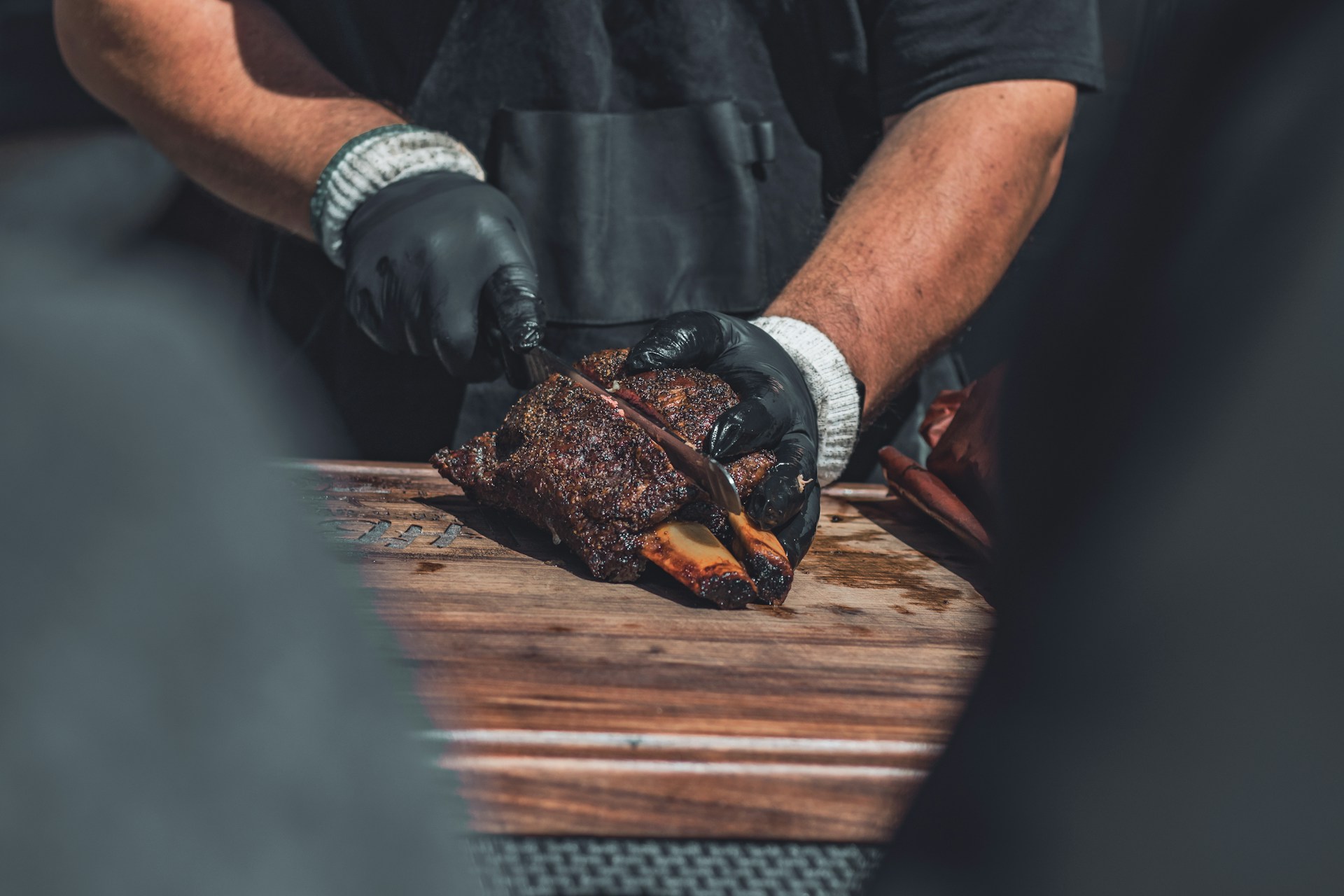
The right slicing technique can make all the difference in the final presentation and texture.
Steps for Proper Slicing:
- Identify the grain of the meat.
- Slice against the grain into 1/4-inch (6 mm) thick slices.
- Separate the flat from the point if desired.
Serving Suggestions:
- Serve with classic sides like coleslaw, cornbread, and pickles.
- Drizzle with BBQ sauce or au jus for added moisture.
Troubleshooting Common Brisket Problems
| Problem | Cause | Solution |
|---|---|---|
| Dry Brisket | Overcooked or not enough fat | Wrap brisket earlier, avoid over-trimming |
| Tough Brisket | Undercooked (not reached collagen breakdown) | Continue cooking to 195–203°F (90–95°C) |
| Bitter Taste | Too much smoke or dirty smoker | Use seasoned wood and maintain clean smoker |
Texas Smoked Brisket Recipe
Ingredients:
- 1 whole packer brisket (12–14 lbs / 5.4–6.4 kg)
- 1/4 cup (60 g) kosher salt
- 1/4 cup (60 g) coarse black pepper
- 1 tbsp (15 g) garlic powder (optional)
Instructions:
- Trim excess fat, leaving about 1/4 inch (6 mm) on the fat cap.
- Apply the rub evenly and let the brisket rest for 30 minutes.
- Preheat the smoker to 225°F (107°C) and add post oak wood.
- Smoke the brisket fat side up until the internal temperature reaches 160°F (71°C).
- Wrap in butcher paper and continue smoking to 195–203°F (90–95°C).
- Rest the brisket for 1–2 hours before slicing and serving.
Final Tips for Perfect Texas Brisket
- Be patient—good brisket takes time.
- Invest in a good meat thermometer for accuracy.
- Don’t skip the resting phase; it’s crucial for tenderness.
Conclusion
Mastering Texas smoked brisket takes practice, but with the right techniques and a little patience, you can achieve tender, flavorful results that rival the best BBQ joints. Whether you’re smoking for a backyard gathering or perfecting your craft for competition, sticking to the fundamentals of Texas BBQ will never steer you wrong.